Menadione Sodium Bisulfite: The Synthetic Vitamin K to Avoid
Not all vitamins are created equal. Learn why Menadione is a controversial additive linked to liver toxicity.
Vitamin K sounds like something you want in your dog's food. It's essential for blood clotting and bone metabolism. A deficiency can cause uncontrolled bleeding. You see "Vitamin K" on a label and think, "Good. They're covering the basics."
Then you look closer at the ingredient panel. It doesn't say "Vitamin K." It says "Menadione Sodium Bisulfite Complex" — a synthetic, lab-made compound that is chemically similar to natural vitamin K but biologically different in ways that matter. It's cheaper. It's more stable on the shelf. It's also been linked to liver toxicity, oxidative damage to cell membranes, and allergic reactions in humans — and it's been banned for human use in several countries while remaining perfectly legal in dog food.
This is the vitamin you actually want to avoid. Not because vitamins are bad. Because synthetic shortcuts that prioritize shelf stability over cellular safety have no place in a "premium" bag of dog food. Let's look at what menadione actually is, why brands use it, and how to spot it before it ends up in your dog's bowl.
What Is Menadione?
Menadione (vitamin K3) is a synthetic compound chemically related to naturally occurring vitamin K1 (phylloquinone) and K2 (menaquinone). It is not found in nature. It is manufactured in a lab, typically from petroleum-derived compounds. In dog food, it appears as "Menadione Sodium Bisulfite Complex," "Menadione Dimethylpyrimidinol Bisulfite," or simply "Vitamin K Supplement."
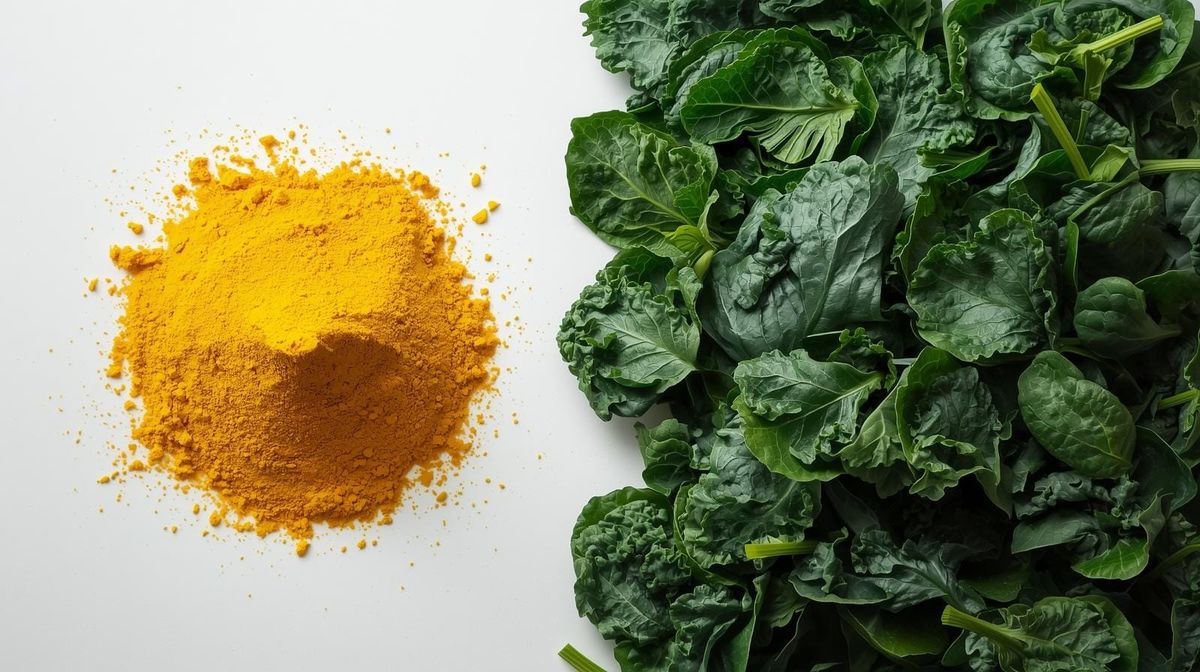
Natural vitamin K exists in two forms: K1, found in leafy greens like kale, spinach, and alfalfa, and K2, produced by bacteria and found in animal tissues and fermented foods. Both are fat-soluble, well-tolerated, and biologically active in the forms your dog's body expects.
Menadione is none of these things. It's a synthetic analog — a chemical approximation of vitamin K that the body must convert into a usable form. That conversion process generates reactive oxygen species. It stresses the liver. And at sufficient doses, it damages the very cells it's supposed to support.
According to the National Toxicology Program, menadione has demonstrated evidence of hepatotoxicity (liver toxicity) in laboratory studies. The European Food Safety Authority has restricted its use in human supplements. The FDA has banned menadione from over-the-counter human vitamin products due to safety concerns. Yet in pet food, it remains a common, legal, and widely used ingredient.
Why Do Dog Food Brands Use Menadione?
Menadione is used in dog food because it is significantly cheaper than natural vitamin K sources, more stable during high-heat extrusion, and has a longer shelf life than naturally derived K1 or K2. It is a cost and convenience decision, not a nutritional optimization.
Natural vitamin K from kale, spinach, or alfalfa is more expensive to source, more variable in concentration, and more sensitive to heat degradation during processing. Menadione solves all those problems. It's cheap. It's consistent. It survives the extruder. It sits on the shelf for two years without degrading.
The brands that use it are not poisoning dogs. They're making a calculation: menadione is legal, meets AAFCO requirements for vitamin K activity, and costs less than whole-food sources. The same calculation that puts powdered cellulose in your dog's food instead of pumpkin and brewer's rice instead of whole grains. Legal. Cheap. Inferior.
We've documented this pattern across the industry: Purina Pro Plan using anonymous animal fat, Royal Canin charging $80 for beer waste and corn, Blue Buffalo hiding "natural flavor" on every label. Menadione is the same playbook applied to vitamins. Synthetic is cheaper than real. The brand pockets the difference. Your dog's liver processes the synthetic.
Is Menadione Dangerous to Dogs?
The evidence for menadione toxicity in dogs at the concentrations used in commercial pet food is limited but concerning. High-dose studies in laboratory animals have documented liver damage, oxidative stress, and red blood cell fragility. Chronic low-dose exposure — the kind that occurs when menadione is in a daily food — has not been rigorously studied in dogs over a lifetime.
This is the uncomfortable truth about menadione: we don't have definitive proof that it harms dogs at the levels found in kibble. What we have is mechanistic plausibility, cautionary bans in human products, and a pattern of the pet food industry using a synthetic ingredient that's been deemed too risky for people.
The FDA's ban on menadione in human supplements was based on evidence of liver toxicity and hypersensitivity reactions. The European Union's restrictionswere based on similar safety data. Dogs are not humans. But the cellular mechanisms of oxidative damage and hepatic stress are conserved across mammals. What damages liver cells in a rat or a human is likely to damage liver cells in a dog.
The question isn't "will this bag of food kill my dog." It's "why is there a synthetic vitamin linked to liver damage in my dog's food when natural alternatives exist?" The answer, as always, is cost.
Which Brands Use Menadione?
Menadione appears across the pet food spectrum, from budget grocery brands to premium-priced formulas. It's commonly found in foods that use synthetic vitamin premixes rather than whole-food vitamin sources. It's also used in some "natural" brands that otherwise avoid synthetic additives.
The presence of menadione is not always obvious. It may be listed as:
- Menadione Sodium Bisulfite Complex
- Menadione Dimethylpyrimidinol Bisulfite (MPB)
- Vitamin K Supplement (vague, requires investigation)
- Menadione Sodium Bisulfate
If you see any of these on an ingredient panel, the food contains synthetic vitamin K3. There is no exception. There is no "safe form" of menadione that avoids the oxidative concern. The only question is whether the brand chose to use it or not.
What Should You Look for Instead?
Look for dog foods that source vitamin K from natural ingredients — kale, spinach, alfalfa, kelp, or other leafy greens — rather than synthetic menadione. Foods that avoid synthetic vitamin premixes entirely and derive micronutrients from whole-food sources are the gold standard.
Natural vitamin K1 is found in green leafy vegetables. Dogs can convert K1 to K2, and K2 is also present in organ meats, egg yolks, and fermented foods. A diet that includes liver, heart, and green vegetables provides natural vitamin K without the synthetic intermediate.
This is one of the quiet arguments for whole-food supplementation. Beef liverprovides natural K2 along with vitamin A, B12, and iron. Beef heart provides CoQ10 and taurine. A freeze-dried organ meat topper delivers micronutrients in their natural forms — no synthetic vitamin K3, no oxidative risk, no liver stress from processing a petroleum-derived compound.
If your dog's food contains menadione, you don't need to panic. But you should ask why a brand that charges premium prices is using a synthetic vitamin that's been banned from human supplements. And you should consider whether the cumulative exposure over a lifetime is a gamble worth taking.
Frequently Asked Questions About Menadione
Q: Is menadione the same as natural vitamin K?
No. Menadione is a synthetic analog (vitamin K3) not found in nature. Natural vitamin K exists as K1 (from plants) and K2 (from animal tissues and bacteria). Menadione must be converted by the liver into a usable form, and that conversion process generates oxidative stress.
Q: Why is menadione banned in humans but allowed in dog food?
The FDA banned menadione from over-the-counter human supplements due to evidence of liver toxicity and hypersensitivity. Pet food regulations are less restrictive. AAFCO permits menadione as a vitamin K source. The regulatory gap exists because pet food safety standards are lower than human food safety standards — a reality we've documented across feed-grade vs. human-grade sourcing.
Q: Should I throw away my dog's food if it contains menadione?
Not necessarily. Menadione at kibble concentrations is not acutely toxic. If your dog is otherwise healthy and you're not in a position to switch immediately, finish the bag and choose a menadione-free food next time. If your dog has liver issues or is on medications metabolized by the liver, discuss with your veterinarian.
Q: How do I know if a food contains menadione?
Read the ingredient panel. Look for "Menadione Sodium Bisulfite Complex," "Menadione Dimethylpyrimidinol Bisulfite," "Menadione Sodium Bisulfate," or the vague "Vitamin K Supplement." If any of these appear, the food contains synthetic vitamin K3.
Q: Do any premium brands use menadione?
Yes. Menadione is not limited to budget foods. Some brands that market themselves as premium or natural still include menadione in their vitamin premix. Price is not a reliable indicator. The ingredient panel is.
What to Do Right Now
Flip over your dog's food bag. Scan the ingredient panel — usually near the bottom, where the vitamin premix is listed. Do you see menadione in any of its forms?
If yes, ask yourself: why is there a synthetic vitamin linked to liver damage in my dog's daily food when natural alternatives exist? Why was this ingredient deemed too risky for human vitamin supplements but acceptable for the animal who sleeps at your feet?
The answer isn't nutrition. It's cost. And your dog's liver is absorbing the difference.
Checked your dog's food bag? Found menadione? Drop the brand and product name in the comments. Let's build a public list of which "premium" foods are still using a synthetic vitamin banned from human supplements.