Why Freeze-Dried Organ Meat Beats Raw and Cooked (And What High Heat Does to Taurine)
So you're convinced. You read our deep dive on organ meat for dogs and you're ready to add liver, heart, and kidney to your dog's bowl. You've seen the nutritional data. You know muscle meat alone is a slow-motion deficiency. You're fired up.
Then reality hits.
The grocery store doesn't have beef liver. Again. The one butcher within driving distance wants $14 a pound. You finally find some, bring it home, and the smell hits you before you even open the package. Your family stages an intervention. Your dog looks at the raw, glistening slab like you've lost your mind. And somewhere in the back of your head, a tiny voice whispers: "The kibble was easier."
That voice is lying to you. Easier doesn't mean better. But there is a way to get raw-level organ nutrition without raw-level inconvenience. It's called freeze-drying, and it solves nearly every problem that stops people from feeding organs—while preserving exactly the nutrients that cooking destroys.
Let's break down the three ways organs can land in your dog's bowl, what happens to the nutrients in each one, and why the method that requires the least effort might also deliver the best nutrition.
What Happens to Nutrients When You Cook Organs?
Cooking organs—whether at home or during kibble extrusion—degrades heat-sensitive nutrients. Taurine, B vitamins, and natural enzymes are partially or significantly reduced at cooking temperatures. What remains is still nutritious, but it's nutritionally diminished compared to raw or freeze-dried organs.
Let's talk about what heat actually does to the nutrients your dog needs most.
Taurine is heat-sensitive. This is well-documented in food science. A study published in the Journal of Animal Science found that thermal processing reduces taurine content in animal tissues. How much? Estimates vary by temperature and cooking time, but losses of 50-70% are commonly cited in the literature. If you're feeding heart specifically for its taurine content—and many owners are, given the ongoing FDA investigation into DCM and grain-free diets—then cooking it is working against your goal.
B vitamins are water-soluble and heat-sensitive. Thiamine (B1), folate (B9), and B12 all degrade to varying degrees during cooking. A review in the Journal of Food Science found that boiling can reduce B vitamin content in meat by 30-50%. Liver's folate advantage? Partially lost to the cooking water.
Natural enzymes are destroyed at relatively low temperatures. Enzymes like catalase and superoxide dismutase, which support cellular health and reduce oxidative stress, begin denaturing around 118°F and are completely inactivated by the time food reaches standard cooking temperatures. These enzymes aren't essential for life—your dog makes their own—but they're a bonus that raw and freeze-dried organs provide and cooked organs don't.
Now, let's be fair. Cooked organs are still vastly better than no organs. Cooked liver still delivers significant vitamin A, iron, and copper. Cooked heart still provides protein and CoQ10 (which is more heat-stable than taurine). If cooking is the only way you'll feed organs, cook the organs. Something is better than nothing.
But "something is better than nothing" is a pretty low bar. Let's look at the raw option.
What Are the Pros and Cons of Feeding Raw Organs?
Raw organs deliver complete, undamaged nutrition—every vitamin, enzyme, and amino acid intact. The downsides are practical: sourcing is inconsistent, storage requires freezer space, prep is messy, and some dogs reject the texture and smell.
Raw feeding advocates are right about one thing: raw organs are nutritionally complete. Nothing is lost. Every enzyme, every B vitamin molecule, every milligram of taurine—all of it arrives in your dog's bowl exactly as nature packaged it.
The problems are entirely practical.
Sourcing is a pain. Chain grocery stores rarely stock beef liver, heart, or kidney. You'll hunt through ethnic markets, specialty butchers, and farmers' markets. Sometimes you'll strike gold. Often you'll come home empty-handed. Consistency is hard.
Storage requires planning. Raw organs have a short refrigerator life. You'll freeze them, portion them, thaw them, and inevitably forget to thaw them until your dog is staring at an empty bowl and you're chipping frozen liver off a block with a butter knife at 6 AM.
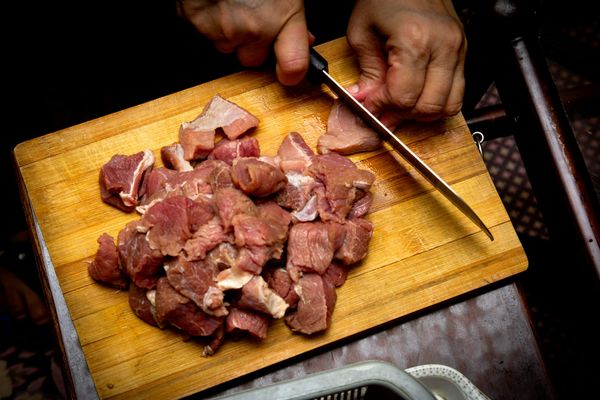
Prep is messy. Raw liver is wet, slippery, and stains everything it touches. Your cutting board, your hands, your countertop. The smell lingers. If you live with someone who didn't sign up for a kitchen that smells like a slaughterhouse, this is a legitimate conflict.
Some dogs say no. Kibble-trained dogs sometimes reject raw organs entirely. The texture is foreign. The smell is intense. You'll find a piece of liver deposited delicately on your rug, untouched, while your dog looks at you like you've served them garbage.
Raw organs are nutritionally perfect and practically difficult. If you can source them consistently, store them properly, handle the prep, and your dog actually eats them—fantastic. You're doing the best thing possible.
For everyone else, there's a third option.
What Is Freeze-Dried Organ Meat and How Does It Work?
Freeze-drying removes water from raw organs at extremely low temperatures, preserving the full nutritional profile—including taurine, B vitamins, and enzymes—without cooking. The result is a shelf-stable powder or bite-sized piece that reconstitutes instantly and requires zero prep.
Freeze-drying is not the same as dehydrating. Dehydration uses heat, which triggers the same nutrient losses as cooking. Freeze-drying uses cold.
The process works like this: raw organs are frozen to around -40°F, then placed in a vacuum chamber. The frozen water in the tissue sublimates—transitions directly from ice to vapor without ever becoming liquid. What's left is the exact same tissue, with the exact same nutrients, minus the water. No heat. No nutrient degradation. Just raw nutrition made shelf-stable.
Here's what that means in practical terms:
| Factor | Raw Organs | Cooked Organs | Freeze-Dried Organs |
|---|---|---|---|
| Taurine retention | 100% | 30-50% | ~100% |
| B vitamin retention | 100% | 50-70% | ~100% |
| Enzyme retention | 100% | 0% | ~100% |
| Shelf life | Days (refrigerated) | Days (refrigerated) | Years (pantry) |
| Prep required | Sourcing, thawing, portioning, handling | Cooking, portioning | Scoop and serve |
| Dog acceptance | Variable | Good | Excellent (mild flavor) |
| Food safety | Standard raw meat handling | Cooked | Standard dry food handling |
Freeze-dried organs are raw nutrition with kibble-level convenience. That's not marketing. That's physics.
Why Does Taurine Matter So Much Right Now?
Taurine is an amino acid critical to canine cardiac function. Dogs can synthesize it from dietary precursors, but those precursors are found primarily in animal tissue. Kibble processing degrades natural taurine, and some grain-free diets—heavy in pea protein and legumes—have been associated with taurine deficiency and dilated cardiomyopathy (DCM) in dogs.
We covered the pea protein and DCM investigation in detail. The short version: the FDA is investigating a potential link between grain-free, legume-heavy diets and canine heart disease. One of the leading theories is that these diets create a taurine deficiency—either by providing insufficient precursors for taurine synthesis or by interfering with absorption.
This puts dog owners in a difficult position. If your dog is on a grain-free food, you're reading headlines about heart disease and wondering if you should panic. (Don't panic. But do pay attention.) If you're cooking homemade food without organs, you may be under-supplying taurine without realizing it. If you're feeding a traditional kibble, the taurine that was naturally present in the raw ingredients was partially degraded during extrusion—which is why many kibble manufacturers add synthetic taurine back in.
Beef heart is the richest natural dietary source of taurine available to dog owners. A 100-gram serving of raw beef heart contains approximately 65 mg of taurine—significantly more than any muscle meat. But as we covered, cooking that heart slashes the taurine content.
Freeze-dried beef heart preserves essentially all of it. If taurine is your concern—and given the DCM investigation, it's a reasonable concern—freeze-drying is the delivery method that preserves what you're actually after.
Is Freeze-Dried Organ Meat a Complete Solution or Just a Topper?
Freeze-dried organ meat is best used as a nutritional topper—a daily supplement that fills the micronutrient gap in whatever base diet you're feeding. It is not a complete meal replacement. It is the missing piece that makes an incomplete diet complete.
Think of freeze-dried organs as the nutritional insurance policy for your dog's bowl.
If you feed kibble, a scoop of freeze-dried organ powder bridges the gap between what the extrusion process destroyed and what your dog actually needs. The synthetic vitamin spray on kibble meets AAFCO minimums. Freeze-dried organs meet nature's standards.
If you feed homemade, a scoop of freeze-dried organ powder eliminates the guesswork. You don't have to source, store, prep, or portion raw organs. You don't have to worry about whether you cooked the taurine out of the heart. You just scoop and serve, and the micronutrient math works.
If you feed raw, freeze-dried organs offer a backup plan for weeks when sourcing is thin or your freezer is empty. They're not a replacement for whole raw organs in a carefully balanced raw diet—but they're a far better gap-filler than skipping organs entirely.
The goal isn't perfection. The goal is consistent, daily organ nutrition without the friction that stops most people from providing it. Freeze-dried organs eliminate the friction.
H2: What Should You Look for in a Freeze-Dried Organ Supplement?
Not all freeze-dried organ products are equal. Look for human-grade sourcing, grass-fed or pasture-raised animals, single-ingredient transparency (no fillers, no flow agents, no synthetic vitamins), and published Certificates of Analysis (COA) that verify purity and nutrient content.
The freeze-dried pet supplement category has exploded, and with growth comes opportunists. Here's what separates a quality product from a marketing exercise:
Human-grade sourcing. If the organs weren't fit for human consumption before freeze-drying, they're not magically elevated by the process. Human-grade means the animals were inspected, the facilities were inspected, and the product started clean.
Grass-fed or pasture-raised. What the animal ate determines the nutrient profile of its organs. Grass-fed beef liver has a different—and generally superior—fatty acid and micronutrient profile compared to feedlot liver. If the brand doesn't specify sourcing, assume feedlot.
No fillers, no flow agents. Freeze-dried organ powder should be one ingredient: the organ. No maltodextrin, no silicon dioxide, no "natural flavors." If there's an ingredient list longer than one item, ask what those items are doing in there.
Published COA. A Certificate of Analysis from a third-party lab verifies that the product contains what it claims and doesn't contain what it shouldn't—heavy metals, pathogens, pesticide residues. Brands that don't publish COAs aren't necessarily hiding something. But brands that do publish them are telling you they have nothing to hide.
Frequently Asked Questions About Freeze-Dried Organ Meat
Q: Does freeze-drying really preserve all the nutrients?
Freeze-drying preserves virtually all macronutrients (protein, fat) and the vast majority of micronutrients, including heat-sensitive compounds like taurine, B vitamins, and natural enzymes. Some minimal oxidation occurs over long storage periods, but the nutritional loss is negligible compared to cooking.
Q: How do I store freeze-dried organ powder?
Keep it sealed in a cool, dry place—the same as you'd store any dry pantry item. Avoid moisture and direct sunlight. Properly stored, freeze-dried organ powder is shelf-stable for months to years without refrigeration.
Q: Can I feed freeze-dried organs instead of raw organs in a raw diet?
Yes, with the caveat that whole raw organs provide texture, moisture, and the mechanical benefits of chewing that powder doesn't replicate. Freeze-dried organs can replace the nutritional contribution of raw organs; they don't replace the dental or enrichment benefits.
Q: How much freeze-dried organ powder should I feed my dog?
Follow the manufacturer's guidelines based on your dog's weight. A typical recommendation is one to two teaspoons per day for a medium-sized dog, adjusted proportionally for smaller or larger animals. More is not better—organs are potent, and overfeeding can create nutritional imbalances.
Q: Is freeze-dried organ powder safe for puppies and senior dogs?
Yes. Puppies benefit from the dense micronutrition during critical growth periods. Senior dogs benefit from the highly bioavailable nutrients at a life stage when absorption efficiency declines. Start with a smaller serving and monitor stool quality.
The Bottom Line
You don't have to choose between raw nutrition and real-world convenience. You don't have to hunt down a specialty butcher every week. You don't have to handle slippery raw liver while your family questions your life choices.
Freeze-dried organ meat delivers everything your dog needs from organs—every vitamin, every amino acid, every enzyme—in a form that takes five seconds to serve and requires zero prep, zero mess, and zero compromise. If you've been meaning to add organs to your dog's diet and haven't done it yet because it's too hard, this is your out.
The kibble industry wants you to believe that good nutrition requires a lab coat or a culinary degree. It doesn't. It requires organs. How you get them into the bowl is up to you.
Have you tried freeze-dried organ meat for your dog? Did it replace raw, supplement kibble, or something else? Tell me your setup in the comments—I want to know what's actually working in real kitchens.