What Is Brewer's Rice in Dog Food? (Spoiler: It's Beer Waste)
You're paying $70 a bag for "premium nutrition." The front of the bag promises a whole-grain symphony of ancient barley, oats, and quinoa harvested by monks under a solstice moon. Then you flip it over. There, in the fine print, smugly wedged between "chicken meal" and "dried beet pulp," sits a phrase you've seen a hundred times and never questioned: brewer's rice.
It sounds rustic. It sounds artisanal. It sounds like something a craft brewery would package in a burlap sack and sell at a farmer's market next to the heirloom tomatoes. What it actually is: spent grain fragments left over after beer production. Your dog isn't eating a premium grain. They're eating the industrial tailings of a Budweiser factory. And the brand that sold you that $70 bag is banking on you never Googling it.
Let's crack open a cold one and talk about what brewer's rice really is, why it's in so many "premium" foods, and why your dog deserves better than beer waste.
What Is Brewer's Rice in Dog Food?
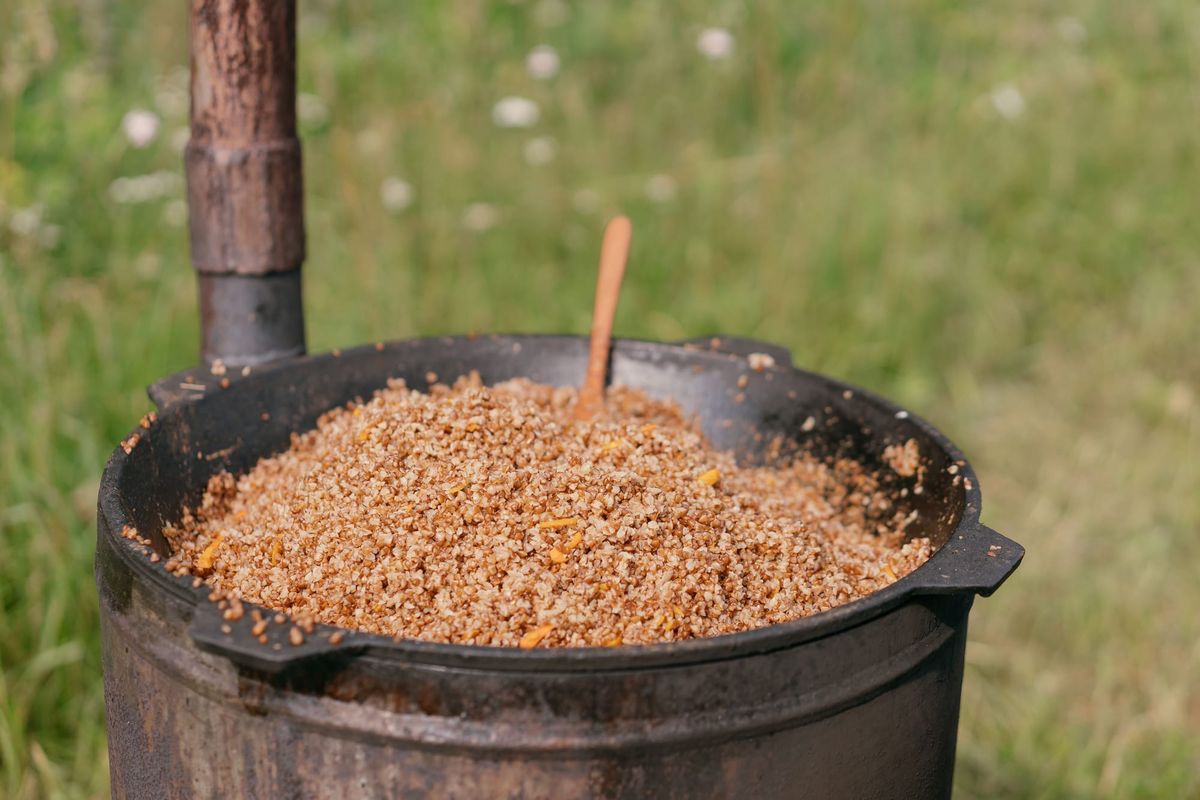
Brewer's rice is a by-product of the beer brewing industry. It consists of small, broken fragments of milled rice left over after whole rice grains are processed for human consumption or brewing. It is not whole grain rice. It is not nutrient-rich. It is a cheap, fragmented carbohydrate filler.
The AAFCO official ingredient definition describes brewer's rice as: "The dried extracted residue of rice resulting from the manufacture of wort (liquid portion of malted grain) or beer and which may contain pulverized dried spent hops in an amount not to exceed 3 percent."
Let's translate that out of bureaucrat. Wort is the sugary liquid extracted from grains during brewing. After the brewer sucks out everything fermentable, the leftover grain mush is dried, ground, and sold to pet food manufacturers for pennies on the pound. Sometimes there's still hop residue in it. Hops, for the record, are toxic to dogs in significant quantities. The AAFCO limit is 3%, which is presumably safe—but imagine having to legally cap the amount of a dog-toxic substance in your "premium" ingredient. That's the quality bar we're working with.
Brewer's rice is not the fluffy white rice you make with dinner. It's the shattered, broken kernel fragments that can't be sold to humans. It's the rice version of the broken crackers at the bottom of the box—except instead of being discounted, it's rebranded as "brewer's" and slipped into a $70 bag of holistic ancestral nutrition.
Why Do Dog Food Brands Use Brewer's Rice?
Brands use brewer's rice because it is an extremely cheap carbohydrate source that adds bulk, provides a modest energy source, and allows them to list "rice" as an ingredient without paying for whole grain rice. It is a cost-cutting measure dressed up as a grain inclusion.
The economics are brutally simple. Whole grain brown rice costs significantly more than brewer's rice. Brewer's rice costs slightly more than sawdust and slightly less than dignity. A pet food manufacturer can buy it in massive quantities from the brewing industry, which is desperate to offload its waste stream to anyone with a truck and a purchase order.
But the real genius is the marketing loophole. The word "rice" polls beautifully with consumers. It sounds natural. It sounds digestible. It sounds like something you'd eat. And legally, brewer's rice is rice—just the broken, spent, nutrient-leached version. The brand gets to print "rice" on the ingredient panel and watch you associate it with the wholesome grain you cook at home. Meanwhile, your dog is eating the brewing industry's garbage.
There's a nutritional argument, too, but it's thin. Carbohydrates provide energy. Dogs need some energy. But brewer's rice is a high-glycemic, rapidly digestible starch with minimal fiber, minimal micronutrients, and none of the germ or bran that makes whole grain rice actually nutritious. It's empty calories in a bag that promises dense nutrition. It's the dog food equivalent of a white bread sandwich with nothing on it—filling, technically, but not nourishing.
Which Dog Food Brands Use Brewer's Rice?
Brewer's rice appears across the pet food spectrum, from budget grocery brands to premium lines sold at boutique retailers. Its presence is not limited to cheap food. Several widely recommended brands list it as a top-five ingredient.
| Brand | Product Line | Brewer's Rice Position |
|---|---|---|
| Purina Pro Plan | Savor Adult Chicken & Rice | Often top 3 |
| Royal Canin | Multiple breed-specific formulas | Frequently in top 5 |
| Hill's Science Diet | Adult Chicken & Barley | Commonly in top 5 |
| Iams | ProActive Health Adult | Often #2 or #3 |
This isn't a budget-brand problem. This is an industry-wide reliance on a waste-stream carbohydrate. The same brewer's rice that pads out a $20 bag of grocery store kibble also shows up in $70 bags sold through veterinary clinics. The price changes. The filler doesn't.
What's particularly galling is when brewer's rice appears alongside ingredient splitting. You might see "brewer's rice, rice bran, rice flour" scattered through the top ten ingredients. Mentally recombine them—rice is suddenly the dominant ingredient. But the meat stays at #1 because the rice was surgically disassembled. We covered this trick in detail in our full guide on how to read a dog food label. Brewer's rice is a frequent accomplice.
Is Brewer's Rice Bad for Dogs?
Brewer's rice is not toxic, but it is a low-quality, nutrient-poor carbohydrate filler that displaces more nutritious ingredients. It is a marker of cost-cutting, not quality. A food heavy in brewer's rice is a food light on the meat and organ nutrition your dog actually needs.
Let's be fair. Brewer's rice won't poison your dog. It provides calories. It's highly digestible in the narrow sense that it passes through the digestive tract without causing upset. For dogs with sensitive stomachs, some veterinarians actually prefer it to more fibrous grains because it's bland and easy to process. That's the one argument in its favor, and it's a legitimate one for a subset of dogs with specific GI issues.
But for a healthy dog eating a premium-priced food? There is no justification. The question isn't "will this hurt my dog?" The question is "what could be in this spot instead?" Every gram of brewer's rice is a gram that isn't chicken, liver, heart, or a whole vegetable with actual micronutrients. It's an opportunity cost. The brand made a choice, and that choice was "cheaper."
There's also the hops issue. AAFCO caps spent hop content in brewer's rice at 3%, which is considered safe. But hops are known to be toxic to dogs, causing malignant hyperthermia—a rapid, dangerous rise in body temperature. The fact that a known canine toxin has a legally permitted threshold in a pet food ingredient should raise an eyebrow. Probably both eyebrows. The risk is small. The fact that the risk exists at all is absurd.
H2: What Are Better Alternatives to Brewer's Rice in Dog Food?
Better carbohydrate sources in dog food include whole grain brown rice, oats, quinoa, sweet potato, and pumpkin. These provide fiber, vitamins, minerals, and slower-digesting complex carbohydrates instead of the empty, rapidly digested starch of brewer's rice.
If a brand wants to include rice, the respectable version is whole grain brown rice—the entire grain with bran, germ, and endosperm intact. It brings fiber, manganese, magnesium, and a slower glucose release. It's what you'd eat. It costs more, so it doesn't show up as often.
Even better, look for foods that use vegetables and legumes as carbohydrate sources: sweet potato, pumpkin, butternut squash, chickpeas. These bring phytonutrients along with the calories. The ingredient panel should read like a recipe, not a list of industrial byproducts.
And let's be honest—the best carbohydrate source for a dog is probably "less carbohydrate." Dogs are facultative carnivores. They need protein and fat. They don't need a grain-heavy diet. If your dog's food lists multiple rice fragments in the top five, the food is built on rice, not meat. That's a structural problem, not just a bad ingredient.
Frequently Asked Questions About Brewer's Rice in Dog Food
Q: Is brewer's rice the same as white rice?
No. White rice is whole grains that have been milled to remove the bran and germ. Brewer's rice is the broken, fragmented leftovers from the milling and brewing processes. It's a lower grade of rice product.
Q: Is brewer's rice gluten-free?
Yes, rice is naturally gluten-free. This is irrelevant to dogs, however—canine grain allergies are rare, and gluten sensitivity is almost exclusively a human condition.
Q: Why do so many "sensitive stomach" formulas use brewer's rice?
Because it's highly digestible in the sense of passing through the GI tract without causing upset. It's a bland, low-fiber starch. This is a legitimate clinical use for dogs with acute GI issues. It does not justify its presence in premium everyday formulas.
Q: Can brewer's rice make my dog gain weight?
It's a high-glycemic, rapidly digested carbohydrate that can spike blood sugar. In excess, it contributes to weight gain just like any other cheap starch. If your dog is packing on pounds on a brewer's rice-heavy food, the filler is doing exactly what cheap carbs always do.
Q: Should I switch foods if mine contains brewer's rice?
If brewer's rice appears in the first five ingredients of a premium-priced food, consider switching. You're paying top dollar for beer waste. Run the food through our 5-Second Dog Food Label Lie Detector and see how it scores.