BHA and BHT in Dog Food: Why These Preservatives Are Banned for Humans
If your kibble stays "fresh" for years, it might contain BHA or BHT. Discover why these suspected carcinogens are major red flags.
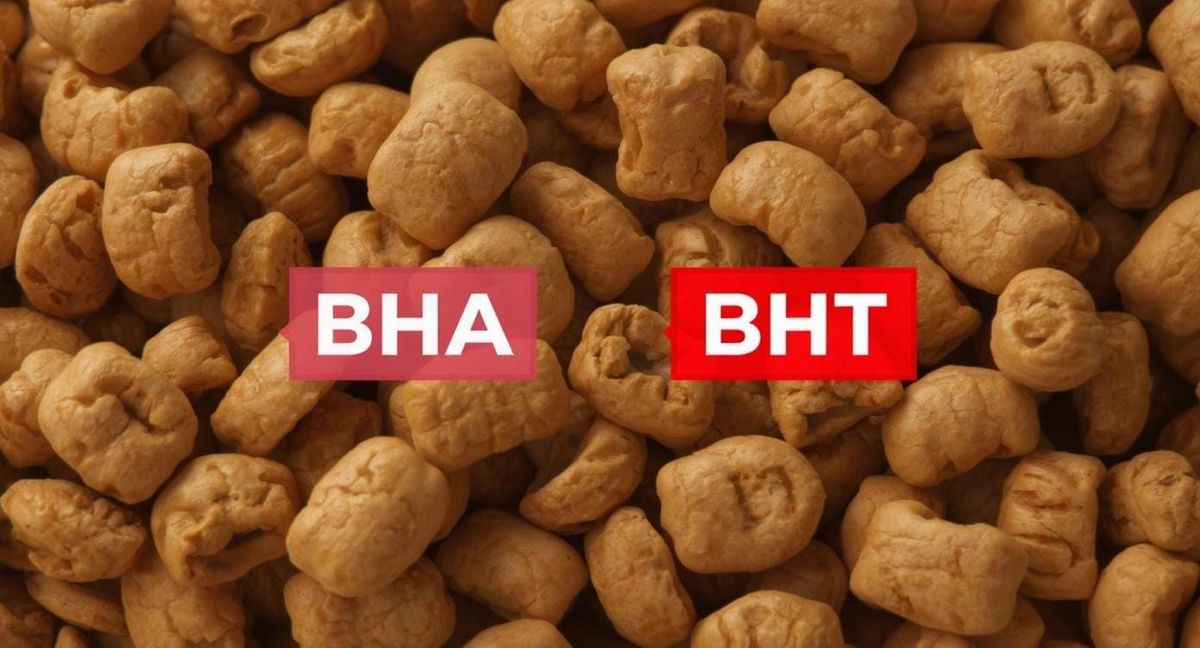
BHA (butylated hydroxyanisole) and BHT (butylated hydroxytoluene) are synthetic antioxidants added to dog food to prevent fats from oxidizing — going rancid — during storage. They work extremely well. A bag of kibble preserved with BHA or BHT can sit on a shelf for 18 months or longer without developing off-flavors or losing caloric value.
They're also classified by the International Agency for Research on Cancer and the National Toxicology Program as possible human carcinogens. BHA is specifically listed as "reasonably anticipated to be a human carcinogen" based on animal studies showing tumor development — particularly in the forestomach — with chronic exposure. BHT has been associated with liver and kidney damage in long-term rodent studies.
These preservatives are not in your dog's food because they're the safest option available. They're there because they're the cheapest and most effective at what they do. Natural preservatives exist. They work. They cost more and have a shorter functional lifespan. The industry chooses synthetic because synthetic is cheaper. Your dog absorbs the difference.
Why Are BHA and BHT Still in Dog Food?
They're legal. The FDA permits both at regulated concentrations — up to 200 ppm combined in most pet foods. The European Union also permits them but with tighter restrictions. The regulatory standard is "not proven dangerous at permitted levels" — not "proven safe for lifetime daily consumption."
This is the same regulatory gap we've documented with menadione — a synthetic vitamin banned from human supplements while legal in dog food and artificial dyes — cosmetic additives with behavioral and carcinogenic concerns. Pet food safety standards are lower than human food safety standards. The ingredients that are too risky for your cereal are fine for your dog's daily kibble. The math doesn't work in your dog's favor.
What Do BHA and BHT Actually Do to the Body?
BHA and BHT are metabolized by the liver. In high doses, BHA induces phase I detoxification enzymes — the same metabolic pathway that can activate procarcinogens into their active, DNA-damaging form. BHT accumulates in body fat and has been shown to cause liver enlargement and thyroid changes in animal studies.
The doses used in pet food are lower than those that caused tumors in laboratory animals. The concern — as with all cumulative exposures — is the lifetime total. A dog eating BHA-preserved food every day for ten years is receiving a chronic, low-dose exposure that has not been modeled in a lifetime canine feeding study. The industry's defense is that the doses are too low to cause acute harm. The counterargument is that carcinogenesis doesn't require acute toxicity — it requires cumulative exposure over time, and your dog is running that experiment right now.
What Should You Look for Instead?
Natural preservatives: mixed tocopherols (vitamin E), rosemary extract, ascorbic acid (vitamin C), or citric acid. These work — they prevent oxidation — and carry no carcinogenic classification. The trade-off is a shorter shelf life: naturally preserved foods last 6–12 months instead of 18–24. That's a feature, not a flaw. Real food spoils.
Frequently Asked Questions About BHA and BHT
Q: Are BHA and BHT banned anywhere?
Not outright, but several countries have tighter restrictions than the US. Japan has restricted BHA use. The EU requires warning labels on some applications. The US allows both without consumer-facing warnings in pet food.
Q: Can I tell if a food contains BHA or BHT from the label?
Yes. Both are listed by name on the ingredient panel: "BHA," "BHT," "butylated hydroxyanisole," or "butylated hydroxytoluene." They're typically near the end of the list, in the preservative section.
Q: Is "mixed tocopherols" the same as BHA?
No. Mixed tocopherols are natural vitamin E compounds. They're a safe alternative. The similarity in chemical-sounding names is unfortunate and confusing, but they are not the same thing.
What to Do Right Now
Flip over your dog's food bag. Scan near the end of the ingredient panel. Do you see BHA or BHT?
If yes, your dog is eating a preservative classified as a possible human carcinogen — because it's cheaper than vitamin E. Switch to a naturally preserved food. The shorter shelf life is the canary in the coal mine. Food that lasts forever isn't food.
Found BHA or BHT in your dog's food? Drop the brand in the comments. Let's build a list of who's still using carcinogenic preservatives when natural alternatives exist.